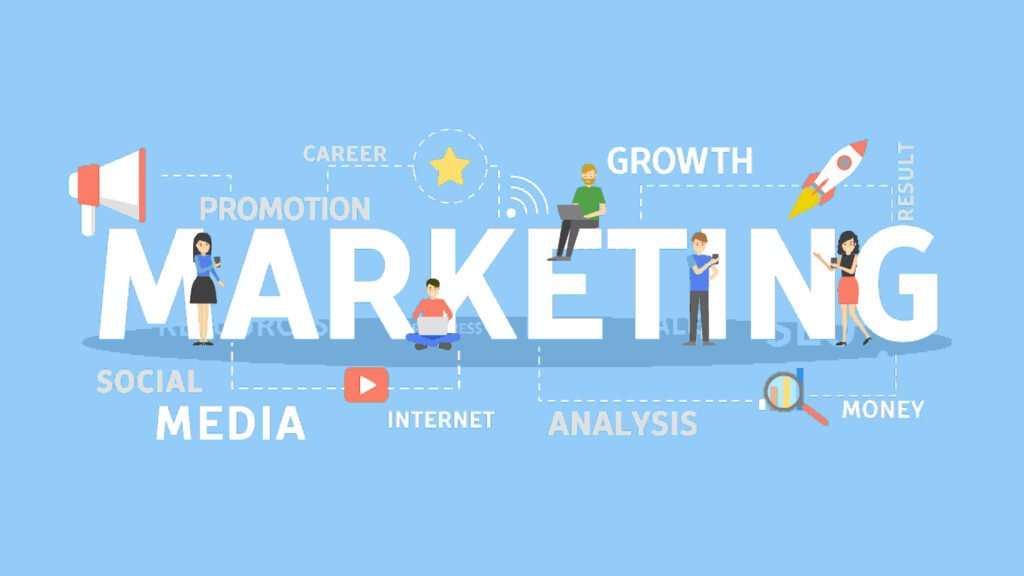
Digital media marketing is the practice of promoting products or services using digital channels such as search engines, social media, email, websites, mobile apps, and paid media to reach target audiences in real time, build brand awareness, and drive measurable conversions.
In simple terms, digital media marketing helps businesses meet customers exactly where they spend most of their time—online—while delivering personalized, data-driven experiences that traditional marketing can’t match.
What Is Digital Media Marketing?
Digital media marketing uses digital technologies and platforms to communicate brand messages, attract customers, and influence buying decisions across the internet.

Unlike traditional marketing (TV, radio, print), digital media marketing allows:
- Two-way communication
- Real-time engagement
- Measurable performance
- Precise targeting
- Long-term scalability
This is why digital media marketing has become the backbone of modern growth marketing strategies for startups, SMBs, and enterprises alike.
How It Works (Step-by-Step)
Digital media marketing follows a structured flow that turns attention into revenue:
-
Audience Identification
Define demographics, interests, intent, and pain points. -
Channel Selection
Choose the right digital marketing channels like search engines, social platforms, or email marketing. -
Content & Media Creation
Develop ads, videos, blogs, emails, or landing pages. -
Distribution & Promotion
Publish via organic and paid media such as SEO, PPC, and social media marketing. -
Measurement & Optimization
Track conversion rate, engagement, and ROI, and optimize continuously.
This systematic approach makes digital media marketing highly adaptable and scalable.
Core Digital Media Marketing Channels
A strong digital media marketing strategy combines multiple channels instead of relying on just one.
1. Search Engine Optimization (SEO)
SEO focuses on improving visibility in search engines like Google and Bing by optimizing content, structure, and backlinks for long-term organic growth.
2. Pay-Per-Click Advertising (PPC)
PPC allows businesses to run ads on search engines and social platforms, paying only when users click. This is ideal for rapid visibility and controlled targeting.
3. Social Media Marketing
Platforms like Instagram, Facebook, LinkedIn, and TikTok help brands build communities, run ads, and test hacks for social media growth in real time.
Many brands also rely on tools like a Social Media Panel to automate publishing, engagement tracking, and campaign scaling.
4. Email Marketing
Email remains one of the highest-ROI digital media marketing channels for nurturing leads, retaining customers, and boosting lifetime value.
5. Content Marketing
Blogs, videos, guides, and case studies educate audiences and support SEO, PPC, and social strategies simultaneously.
6. Affiliate & Influencer Marketing
Creators promote products for commissions, blending performance marketing with brand credibility.
Digital Media Marketing vs. Traditional Marketing
| Factor | Digital Media Marketing | Traditional Marketing |
|---|---|---|
| Targeting | Highly specific | Broad |
| Measurement | Real-time analytics | Limited |
| Cost | Flexible budgets | High upfront cost |
| Interaction | Two-way | One-way |
| Optimization | Continuous | Fixed |
This flexibility is why businesses shift budgets from traditional marketing to digital media marketing every year.
Why It Is Important Today
Digital media marketing is no longer optional—it’s essential.
Key benefits include:
- Increased brand awareness
- Better audience targeting
- Higher conversion rates
- Lower customer acquisition cost
- Real-time performance tracking
- Long-term scalability
Businesses working with a Social Media Marketing Agency often see faster results due to expert execution and continuous optimization.
Effective Strategies
To outperform competitors, modern brands combine creativity with data.
Proven Strategies:
- SEO-driven content clusters
- PPC + retargeting funnels
- Email automation workflows
- Influencer partnerships
- Ads using repetition for recall
- Ads with alliteration for memorability
- Conversion-optimized landing pages
- Marketing case studies for trust
Brands that apply growth hacking strategies across channels often outperform those using isolated tactics.
Digital Media Marketing for Small Businesses
Digital media marketing creates equal opportunities for smaller brands.
Even with limited budgets, small businesses can:
- Use organic SEO for long-term growth
- Apply Instagram hacks to boost reach
- Leverage social media help for small business tools
- Run low-budget PPC campaigns
- Build email lists early
This makes digital media marketing one of the most cost-effective growth engines available.
Common Mistakes in this
Avoid these pitfalls:
- Ignoring data and analytics
- Relying on only one channel
- Overspending on ads without CRO
- Posting without strategy
- Chasing trends without brand alignment
Successful digital media marketing is systematic, not random.
Future Trends in Digital Media Marketing
The following factors are shaping the future:
- AI-driven personalization
- Voice search optimization
- Short-form video dominance
- First-party data strategies
- Interactive content
- Real-time marketing automation
Brands that adapt early gain a lasting advantage.
FAQs
- Is it effective?
Yes, it delivers measurable, targeted, and scalable results. - Could you please let me know how long it typically takes to see results
SEO is long-term, while PPC and social ads can deliver instant results. - What channels are part of it?
SEO, PPC, social media, email, content, and affiliate marketing. - How is it different from traditional marketing?
It offers real-time analytics, personalization, and two-way interaction. - Is it expensive?
It fits all budgets, from startups to enterprises. - Can it help brand awareness?
Yes, it’s one of the most effective tools for awareness and recall. - Do I need an agency for that?
While agencies are not mandatory, they do accelerate growth. - What metrics matter in this?
These metrics include conversion rate, CTR, engagement, ROI, and customer lifetime value. - Is it future-proof?
Yes, because consumer behavior continues moving online.
Conclusion
Digital media marketing has become the foundation of how modern businesses grow, compete, and connect with their audiences. By using the right mix of search engines, social media, email, content, and paid advertising, brands can reach the right people at the right time with messages that are relevant, measurable, and impactful. Unlike traditional marketing, digital marketing allows continuous optimization, real-time performance tracking, and precise targeting—making every marketing effort more efficient and results-driven.
Whether you’re a startup building visibility, a small business looking for affordable growth, or an established brand aiming to scale faster, digital media marketing provides the flexibility and tools needed to succeed in a digital-first world. By following a structured strategy, avoiding common mistakes, and staying updated with emerging trends, businesses can turn digital media marketing into a long-term growth engine that delivers consistent traffic, engagement, and revenue.